
Introduction: Understanding the Mahoran Exception
Why did Mayotte remain French while the other islands of the Comoros archipelago chose independence in 1975? This question, regularly raised in international public debate, is often treated simplistically, as if Mayotte’s continued membership in the French Republic were merely a colonial anomaly. Yet the island’s history tells a far deeper, more complex, and much older story.
Mayotte did not become French at the same time or under the same conditions as the other islands of the archipelago. It possesses a distinct historical trajectory, shaped by centuries of regional conflict, rivalry between sultanates, raids, political violence, and chronic instability in the Mozambique Channel. When Sultan Andriantsoly signed the treaty of April 25, 1841 with France, it was not the result of military annexation, but rather a deliberate political choice made in a context of permanent threats.
Mahoran attachment to France cannot therefore be understood without addressing the island’s collective memory: invasions, humiliations, famine, political violence, and the feeling of abandonment experienced during the period of internal autonomy of the Comoros between the 1960s and 1974.
This article revisits the historical, political, cultural, and geopolitical reasons explaining why the Mahoran people overwhelmingly chose to remain French. It relies on historical facts, treaties, referendums, archives, and documented events.
Mayotte Before France: An Island Marked by Wars and Raids
Before the arrival of France, the Comoros archipelago was not a unified political entity. Contrary to certain contemporary narratives, there was no unified Comorian state before French colonization.
The four islands — Mayotte, Grande Comore, Anjouan, and Mohéli — were organized around rival sultanates frequently at war with one another. Alliances constantly shifted, conflicts were common, and populations regularly suffered from raids.
Mayotte occupied a strategic position in the Mozambique Channel. This geographical location made it a preferred target. The island suffered incursions from Anjouan, Madagascar, and slave-trading networks operating throughout the Indian Ocean.
Historical chronicles report multiple episodes of violence, looting, and kidnappings of inhabitants. These traumas deeply marked the Mahoran collective memory.
The warlike sultans of the region regularly sought to extend their influence over Mayotte. However, contrary to some contemporary political narratives, Anjouan’s suzerainty over Mayotte never constituted lasting and uncontested domination.
Historians mainly refer to a very brief period of Anjouanese domination around 1835–1836. This authority was fragile, contested, and temporary.
The idea that Mayotte was naturally attached to the other islands therefore belongs more to modern political reconstruction than to uninterrupted historical reality.
The Fatidra: A Foundational Pact in Mahoran History
One of the most symbolic episodes in Mayotte’s history is the fatidra concluded between Mawana Madi and Andriantsoly.
In Malagasy and Swahili traditions of the region, the fatidra is a sacred blood pact binding the parties in a profound political and moral alliance.
This pact represents far more than a simple diplomatic agreement. In Mahoran historical memory, it symbolizes a mutual desire for protection and stability against external threats.
Andriantsoly, the last Sultan of Mayotte, understood that the island could not survive alone in a regional environment dominated by wars, rivalries, and the ambitions of neighboring sultanates.
Seeking support from an external power thus appeared as a strategic necessity.
This reality is fundamental: the relationship between Mayotte and France did not arise from brutal military conquest, but from a political initiative launched by Mahoran authorities themselves.
Andriantsoly and the Treaty of 1841: A Deliberate Political Choice
On April 25, 1841, Sultan Andriantsoly signed a treaty with Commander Pierre Passot ceding Mayotte to France.
The treaty was officially ratified by King Louis-Philippe in 1843.
The text of the treaty is explicit:
“Sultan Andriansouli cedes to France in full ownership the island of Mayotte, which he possesses by right of conquest and convention.”
This wording is essential.
It demonstrates that Andriantsoly considered himself the legitimate sovereign of Mayotte.
Contrary to certain modern political claims, Andriantsoly never officially renounced the throne of Mayotte in favor of Anjouan or any so-called Comorian authority.
On the contrary, the 1841 treaty recognized his political authority.
In exchange for the cession, France guaranteed the Sultan a pension and undertook to ensure the island’s protection.
Mayotte officially became French in 1843.
This point is crucial: Mayotte became French several decades before the other islands of the archipelago.
Grande Comore became a French protectorate in 1886. Anjouan in 1886–1887. Mohéli in 1887 and 1892.
In other words, when the other sultanates progressively accepted French protection at the end of the nineteenth century, Mayotte had already been French for more than forty years.
This major historical difference is often minimized in contemporary debates.
The Other Comorian Sultans Also Requested French Protection
Another often-forgotten element concerns the attitude of the other Comorian sultans toward France.
Beginning in the 1880s, the authorities of Grande Comore, Anjouan, and Mohéli themselves sought French protection.
Several diplomatic correspondences and protectorate agreements show that these sultans aimed to preserve their power against internal rivalries and regional threats.
France gradually became the political arbiter of the archipelago.
This means it is historically inaccurate to portray Mayotte as the only island “colonized” against its will.
The other islands also accepted French authority within a specific geopolitical context.
The fundamental difference is that Mayotte had already developed a much older political and administrative relationship with France.
Dzaoudzi: The True Historical Administrative Center of the French Comoros
Between 1912 and 1946, the archipelago was administratively attached to Madagascar under the designation “Madagascar and Dependencies.”
Then, from 1946 onward, the Comoros became a separate overseas territory.
The capital was established in Dzaoudzi, in Mayotte.
This choice was not insignificant.
For decades, Mayotte constituted the real administrative center of the French Comoros.
The governors’ residence was located in Dzaoudzi. The principal administrative services were concentrated there. Civil servants worked there. State infrastructures developed there.
This historical reality once again demonstrates that Mayotte occupied a central place in the French political organization of the archipelago.
The administrative grouping of the four islands primarily responded to colonial management convenience.
It did not imply the prior existence of a unified Comorian nation.
The contemporary “Comorian” political identity is largely a product of the late colonial period and internal autonomy.
Internal Autonomy: An Experiment That Ultimately Divided the Archipelago
In the 1960s, France gradually led the Comoros toward internal autonomy.
This period is often presented as a natural step toward independence.
For many Mahorans, however, it was experienced as the beginning of political marginalization.
The progressive transfer of institutions to Moroni fueled deep resentment in Mayotte.
The political elites of Grande Comore gradually took control of decision-making centers.
Mahorans denounced political and administrative domination.
In the Comorian Territorial Assembly, Mahoran representatives found themselves in the minority.
Important decisions were increasingly made from Moroni.
The gradual transfer of administrations and public services to Grande Comore was experienced as dispossession.
For many Mahorans, internal autonomy became synonymous with political humiliation.
Humiliations, Violence, and Mahoran Memory
The Mahoran collective memory retains the memory of an extremely tense period during the late 1960s and early 1970s.
Numerous testimonies refer to discrimination, political violence, and humiliations targeting Mahorans favorable to remaining within the French Republic.
Economic tensions further aggravated the situation.
Accusations of economic blockades circulated, particularly concerning food supply difficulties affecting Mayotte.
In Mahoran popular memory, this period remains associated with famine and the consumption of “silgom,” a term designating young immature breadfruit shoots used as survival food.
Accounts of violence against Mahoran women also circulate in militant and memorial testimonies.
These memories, transmitted from generation to generation, largely explain the persistent distrust among a significant portion of the Mahoran population toward current calls for reunification with the Comoros.
Even if all events from this period are sometimes difficult to document precisely in official archives, their place within Mahoran collective memory is considerable.
The Chatouilleuses: The Women Who Changed Mayotte’s History
The struggle to keep Mayotte within France cannot be understood without mentioning the “Chatouilleuses,” also called the “Sorodas” in popular memory.
This women’s movement emerged during the 1960s and 1970s.
These women openly opposed Comorian independence leaders.
They organized demonstrations, acts of civil disobedience, and popular mobilizations.
Their nickname came from their militant method of publicly tickling certain political leaders to ridicule them and force them to leave.
Behind the sometimes folkloric aspect of the story, the Chatouilleuses’ struggle was profoundly political.
These women believed that Mayotte’s future would be threatened within a state dominated by the other islands.
They denounced the violence, humiliations, and contempt allegedly inflicted upon Mahorans.
The slogan “Non au Karivendzé” became one of the symbols of this resistance.
For Mahoran activists, remaining French meant protecting their rights, security, and future.
The role of women in this mobilization constitutes a major historical singularity.
Few decolonization movements in the world were so strongly carried by women.
The 1974 Referendum: A Massive Democratic Choice
On December 22, 1974, France organized a referendum on Comorian independence.
The result was clear:
- Grande Comore voted massively for independence;
- Anjouan voted for independence;
- Mohéli voted for independence;
- Mayotte voted against it.
In Mayotte, approximately 63.8% of voters chose to remain within France.
In 1976, a second referendum confirmed this choice with more than 99% of votes in favor of remaining within the French Republic.
These results reflected an extremely strong popular will.
Comorian authorities nevertheless challenged the principle of island-by-island voting.
According to them, the result should have been interpreted globally at the archipelago level.
However, this position raises a major contradiction.
Recognizing the existence of a single Comorian people before 1975 would mean denying the historical, political, and institutional diversity of the different islands.
Furthermore, the Comorian state itself was internationally recognized with borders inherited from French colonial administration.
The Mayotte issue therefore remains at the heart of a conflict between two principles of international law:
- territorial integrity;
- the right of peoples to self-determination.
France maintains that the Mahoran people democratically exercised their right to self-determination.
The United Nations and the Mayotte Question: A Complex Legal Debate
During the 1970s, several resolutions of the United Nations General Assembly condemned the continued French administration of Mayotte.
However, these resolutions are not legally binding.
They primarily reflect political positions linked to the context of decolonization.
France maintained its position: the Mahoran people’s choice must be respected.
After Comorian independence in 1975, the archipelago rapidly experienced severe political instability.
Coups d’état, mercenary interventions, and institutional crises followed one another.
The famous mercenary Bob Denard intervened several times in Comorian political life.
This instability reinforced among many Mahorans the conviction that they had made the right choice by remaining French.
Why Mahorans Want to Remain French
Mahoran attachment to France rests on several dimensions.
1. An Ancient Historical Relationship
Mayotte has been French since 1843.
This longevity deeply distinguishes the island from the other territories of the archipelago.
2. A Memory of Regional Violence
Raids, wars between sultanates, and political tensions of the 1960s–1970s left deep scars.
3. The Refusal of External Political Domination
Many Mahorans believe they were marginalized in favor of Moroni during internal autonomy.
4. Repeated Democratic Choice
The popular consultations of 1974, 1976, 2000, and 2009 repeatedly confirmed the desire to remain French.
In 2009, more than 95% of voters approved departmental status.
Mayotte officially became France’s 101st department in 2011.
5. The Search for Stability
For many Mahorans, France represents institutional stability within a region marked by political instability.
Mayotte Today: Between French Pride and Contemporary Challenges
Today, Mayotte faces considerable challenges.
Mass illegal immigration from the other Comorian islands generates strong social tensions.
Mahorans sometimes feel that their historical choice is constantly being challenged.
Paradoxically, thousands of Comorians risk their lives every year in kwassa-kwassa boats to reach Mayotte.
This phenomenon illustrates the considerable economic and institutional gap between Mayotte and the other islands of the archipelago.
For many Mahorans, this reality confirms their attachment to the French Republic.
Conclusion: Mayotte, a Loyalty Forged by History
Mayotte did not remain French by accident.
The Mahoran choice is rooted in a long history marked by regional conflicts, the search for protection, an ancient relationship with France, and the constant desire to preserve a distinct political identity.
Reducing the Mayotte issue to a simple colonial survival means ignoring two centuries of history.
Mayotte’s continued membership in the French Republic results from a succession of political decisions, treaties, referendums, and popular mobilizations.
Above all, it results from a democratic will constantly reaffirmed by the Mahoran people themselves.
Understanding Mayotte therefore requires listening to the memory of its people.
A memory shaped by raids, rivalries between sultanates, political humiliations, the struggle of the Chatouilleuses, and the deliberate choice of France.
It is this often-overlooked or deliberately simplified history that explains why Mayotte remained French — and why an overwhelming majority of Mahorans still wish to remain so today.
Blog
Cette section offre un aperçu du blog, présentant une variété d’articles, d’analyses et de ressources pour informer et inspirer les lecteurs.
-

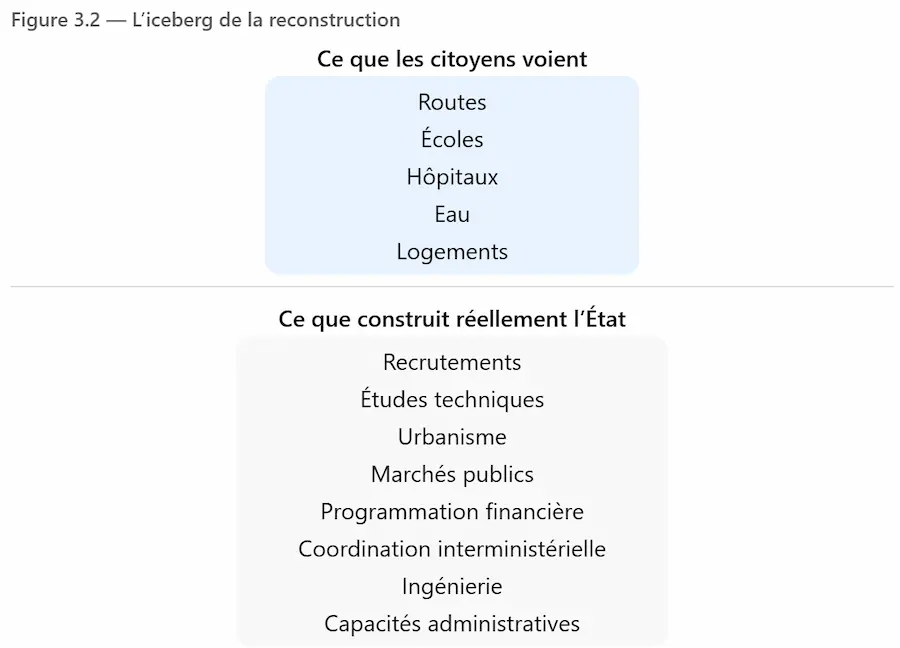
Chapitre 3 — Mayotte et les limites des politiques de relance : lorsque la monnaie rencontre les capacités institutionnelles
Document de travail « Une catastrophe naturelle détruit des infrastructures, mais elle fragilise également les…

-

Note de développement n°1
La reconstruction silencieuse Pourquoi la capacité institutionnelle précède la reconstruction visible : le cas de…
-

Development Notes from Mayotte
Note de développement n°1 La reconstruction silencieuse Pourquoi la capacité institutionnelle précède la reconstruction visible…

Laisser un commentaire